Boozhoo, kwey kwey, oki, tansi, tunngasugit, hadïh, or hello…
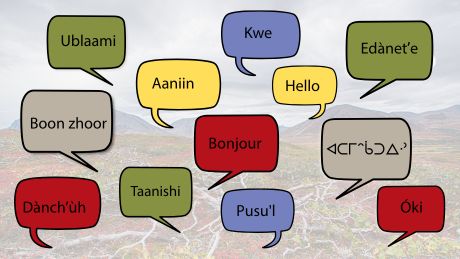 Image credit: NCCIH.
Canada’s National Indigenous Languages Day, held annually on March 31st, is a day to celebrate and honour the diverse Indigenous languages that form an important part of the country’s cultural and linguistic heritage. There are over 70 distinct Indigenous languages spoken across the land that carry centuries of traditional knowledge, oral history, and worldviews. These languages are not only valuable to the communities that speak them, they are also an essential part of Canada’s national identity and history, making the critical state of many Indigenous languages a national issue. Due to decades of colonization, residential schools, and assimilation policies, many Indigenous languages in Canada are endangered or have only a handful of fluent speakers left. National Indigenous Languages Day brings attention to these urgent realities, while also highlighting the inspiring work being done by language keepers, Elders, educators, and youth to revitalize and reclaim their languages.
Indigenous communities across Canada are leading efforts to breathe life back into their ancestral tongues. Many celebrate National Indigenous Languages Day by holding workshops, cultural events, storytelling sessions, and intergenerational gatherings where Elders share language and teachings with younger generations. Efforts are made year-round through immersion schools, language apps, community workshops, and intergenerational mentorship. Some educational institutions and organizations are increasingly recognizing the importance of incorporating Indigenous languages into their programming, and some provinces have introduced curriculum changes that include Indigenous language instruction. These efforts reflect a growing awareness that reconciliation must include respect for, and revitalization of, Indigenous languages.
In 2019, Canada passed the Indigenous Languages Act, a significant step toward language preservation and promotion, which established a framework to support these revitalization efforts through sustainable funding and collaboration. Although this was a step in the right direction, more work still needs to be done. National Indigenous Languages Day is a yearly reminder that the survival of these languages depends not only on funding and policy but also on collective respect, learning, and partnership.
Learn more about Indigenous languages in Canada: