 NCCIH Voices from the field podcasts
Voices from the field
Welcome to Voices from the field, a podcast series produced by the National Collaborating Centre for Indigenous Health (NCCIH), which focuses on innovative research and community-based initiatives promoting the health and well-being of First Nation, Inuit and Métis peoples in Canada.
Episode 38 – Reclaiming Indigenous ways of being to transform communities | Listen on SoundCloud
Description
In this podcast, Laura Mueller and X'staam Hana'ax (Nicole Halbauer), two First Nations PhD candidates, researchers, and mothers, have a conversation about their efforts to decolonize community governance structures and academia. They talk about their roles as mentors, leaders, and advocates to foster environments that can support Indigenous student success and build Indigenous leadership. Rather than trying to shape Indigenous ways into western frameworks, Mueller and X'staam Hana'ax argue that embracing Indigenous knowledges and relational worldviews are key to community transformation and empowerment. They discuss ways that this can be done through, for example, developing wholistic solutions to community issues rather than using siloed approaches; leaving space for ceremony in Indigenous governance; reclaiming matriarchs as leaders and mentors in communities; using Indigenous knowledge collection and sharing methods to enhance the accessibility of knowledge for communities; and recognizing Indigenous knowledge systems as equal to western knowledge systems.
Scroll down to read a web version of the transcript, or download the transcript here in PDF format
Listen to the entire Voices from the field series on: SoundCloud | Apple Podcasts | Amazon Music | Spotify | YouTube Music
Bios
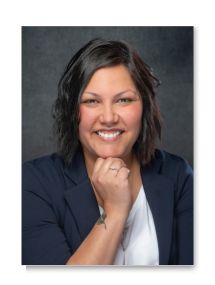
Laura Mueller is a researcher of Dakelh and Nêhiyaw ancestry, belonging to Nak’azdli Whut’en First Nation, with matrilineal ties to Flying Dust First Nation. She is a PhD candidate in Natural Resources and Environmental Studies at the University of Northern British Columbia, working at the intersection of Indigenous financial architectures and governance. Her research questions dominant economic models by examining how decision-making shifts when rooted in kinship and land. Drawing on more than a decade of experience in finance, she advances work that moves beyond extraction toward systems that honour Indigenous ways of being, knowing, and doing, guided by traditional protocol and responsibility to future generations.
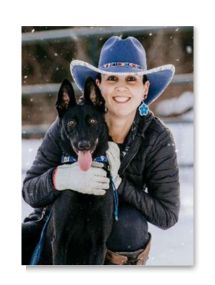
X’staam Hana’ax (Nicole Halbauer) is a member of the Ts’msyen community, Kitsumkalum. Nicole belongs to the Ganhada p’teex (clan) of the Waap (House) of K’oom. Nicole’s advocacy work for the residents of northern British Columbia spans over a decade. She has worked tirelessly to bring decolonized governance to community organizations.
Beyond her professional roles, Nicole is deeply committed to her family. She and her husband have raised six children, along with a few nieces, nephews, they are also blessed with two amazing grandchildren, all of whom hold a special place in her heart. Nicole’s personal experiences have deeply influenced her community advocacy.
Transcript
– Music –
X’staam Hana’ax (Nicole Halbauer): [Indigenous language used]. Welcome to Voices from the field, a podcast series produced by the National Collaborating Centre for Indigenous Health (NCCIH), which focuses on innovative research and community-based initiatives promoting the health and well-being of First Nation, Inuit, and Métis peoples in Canada.
– Music –
X’staam Hana’ax (Nicole Halbauer): Hello, everyone, good day. My name is Nicole Halbauer. My Ts’msyen name is X’staam Hana’ax, it means “Victorious Woman,” and I am coming to you from my traditional unceded territory along Ksyen, the Skeena River. And I'm so happy today to be talking with my friend, fellow PhD student, Laura Mueller.
And we are so grateful to NCCIH for this opportunity, and we just want to give a big shout out to all the work that they do in communities. And we want to thank you for joining us and listening in on our conversation while we share a cuppa and we talk about all the things Indigenous that we can think of.
Laura Mueller: Thank you so much for having me, this is fantastic. So, I'd like to thank the Indigenous Research Ambassadors Program through the University of Northern British Columbia that brought us together today, that really inspired this conversation.
So my name is Laura Mueller. I am a Nation member of Nak’azdli Whut’en through my father's side, and then on my mother's side have ties to Flying Dust First Nation in Meadow Lake, Saskatchewan. And I'm currently located in Prince George on the traditional and unceded territories of the Lheidli T’enneh.
I am a PhD student in Natural Resources and Environmental Studies program at the University of Northern British Columbia [UNBC]. My focus is on Indigenous financial architectures, so basically, I focus on Indigenous economic development, traditional Indigenous governance, and how we can potentially look at reclaiming that.
X’staam Hana’ax (Nicole Halbauer): That's amazing. Well, I am also a PhD student at University of Northern British Columbia, and I was also part of the Indigenous Research Ambassadors Program. My PhD program is the Health Sciences, and my focus is on the experiences of Ts’msyen women in healthcare over the last 30 years. Laura and I both have MBAs – mine is from University of Northern British Columbia’; what about you, Laura?
Laura Mueller: Mine is actually from UNBC as well. So, I’ve definitely – they've uplifted me in many, many ways. And I had so many opportunities to participate in research projects through that process as well, which I don't know if I would have had this experience if I had been in another university. So, I'm very grateful to the university and all the faculty and those that supported me along this journey.
X’staam Hana’ax (Nicole Halbauer): That's fantastic.
I live in Terrace, BC in Ts’msyen Territory, and when I went back to school at the age of 36 with six children at home, I could not afford to move to Vancouver to finish a degree. And so, I was so grateful to our local community, Coast Mountain College, and being able to transfer that over to UNBC, because I wanted to do a PhD program, but not able to afford to move my entire family to Vancouver or Kelowna or anywhere where I would have to stay for years on end. So, I am so grateful to have northern education accessible to me.
Laura Mueller: Before we jump into other things, I actually would like to – I actually really agree with that. It was part of the reason why I chose to pursue UNBC for my PhD as well: because of the community, because of it being surrounded by so many First Nations, because of the accessibility for First Nations, and for myself being a single mother and knowing that it would create more hardship to move to big city centres.
So, I think that's actually a really common thing and consideration for a lot of Indigenous people.
Nicole Halbauer: So, tell me about the Natural Resources and Environmental Studies […] so that I'm informed enough to carry on in this conversation.
Laura Mueller: My background is in finance. I was a Senior Financial Advisor for over a decade, and I've worked in finance for close to two decades in entrepreneurship. And when I first got to academia, I actually asked, “Why are so many Indigenous people in Environmental Studies?” And the answer that I received was because everything that we do is centred in land. And as I went through my studies and I did my research and I found out more about what academia could offer my career, I actually found and came to the conclusion that Indigenous finance is closer to Natural Resources and Environmental Studies than it is to traditional Western concepts of commerce.
So, I chose to pursue a PhD in this program. It is interdisciplinary, and my PhD Supervisor is actually the chair of the Political Science Department. He's worked with a number of different First Nations communities over the years for governance issues, and when I first approached him that was kind of what I said: right now, our First Nations economic development offices are, for the most part, most of them are colonially imposed. And the infrastructure was decided on by the Canadian government, and it doesn't necessarily reflect traditional Indigenous ways of being or knowing or doing.
And I wanted to kind of dive into that more: what would culturally relevant wealth, finance – what does it actually look to us? Because I've had the privilege of attending different events and conferences, and I keep hearing the same thing over and over again, “Don't build the same system. Don't build the same system.” And I mean, what could that even mean? That could mean so many different things. And the other thing I kept hearing from economic development CEOs was, “We want a sustainable financial model.” And what that entails – of course we're thinking about the environment, of course we're thinking about those next seven generations – but a lot of the consideration is so much of our wealth is tied up in community and social context, and how do we actually create the space in the environment to help those in poverty and those in addictions and alcoholism and all that kind of things, and really mitigating for those intergenerational trauma?
So much of my work is actually tied to health. I mean, there is no way of looking at it that doesn't involve a wholistic viewpoint.
X’staam Hana’ax (Nicole Halbauer): That's how I wound up in the MBA program, is because I was trying to figure out what is this piece that seems to be inaccessible? I had worked in health administration for 30 years and I was thinking, “There's something here missing.”
And so, I was thinking about all the different ways you could do a PhD. And I'm like, “No, I really need to do a health PhD, a Health Sciences PhD.” But, in health is included our environment, our natural resources, our education system, our family structure, […] the integrity of our culture. And I thought, “No, I'm going to do this in health and I'm going to give place in story, because this wholistic view needs to come from every aspect.” We're coming from colonial constructs that are meant to divide us into systems and silos and institutions and structures, instead of keeping us whole.
And I always found it really unnerving that the medical part of health is what was considered health. What about everything that impacts that? And one of those things – we know poverty is a huge indicator, contributor to health, or lack of health in various ways – but an insulating factor is the layers of community that you have access to; your access to your natural foods, healthy foods, and our own traditional diets in many cases are very, very important to us. And I'm like, all of this comes together, and it's so important when we're considering what is wealth in our Nation and how we're moving through the different systems, colonial constructs that we have to survive in and we have to succeed in, and we have to have a great deal of knowledge in. But how do we bring that home so that it translates into the same governance and leadership and community development and education systems that fit who we are at our core?
And so, I found that really exciting and really inspiring once I started this. And one of the biggest inspirations for me was Nicole Redvers. I interviewed her on one of the podcasts, and she was talking about “epistemicide,” and that's the loss of knowledge, the killing of knowledge, the annihilation of knowledge, the demeaning of knowledge. And it just moved my heart. And then I started thinking well, “I don't want to do the same PhD, just go get more colonial knowledge,” it wasn't my thing. And then I found Shawn Wilson's book, Research Is Ceremony, and Margaret Kovach, and I was like, “No, this can be done differently.”
And that's how I wound up in the program, because I have a real desire to take the knowledge systems and structures that my Elders know, and remember, and live by, and write them down so that our future generations have options in forms of governance. And bringing some of that beauty and that strength and that power back into what our governance used to be, can be, and is growing into again.
Laura Mueller: And I think, you know, and that's so much of how the intent that I have with my work and the focus that I'm trying to do. It's about looking at traditional governance systems, because that's something that my Nation is actually trying to reclaim as well, is how do we start integrating that in a way that resonates with who we are as a people? And I mean there's certain considerations. We know, of course, pre-colonial economic activity won't suffice in this case, but we can take what we have, and we can look at it through this contemporary context.
One of my readings that I had, there's a moment where they mention how knowledge is like this basket, this bundle, and you carry it and we understand that we're supposed to use the tools and resources that our ancestors used and that those that came before us used. But at the same time we need to add to it as well. And I think that's a huge consideration. But when you think of youth, and you know 80% of our Indigenous youth are living in urban centers, and there's such a disconnect from the culture and from who they are and how do we actually figure out what works for them as well? How do we create solutions and governance systems that not only honour traditions, but try to figure out how to navigate the world that we live in?
I mean, so much of part of why Natural Resources Environmental Studies resonates with my work as well is because how do we actually look at climate resilience and look at climate finance and disclosure and all of that kind of thing? So, you know everybody's on the systems thinking trend, but this is something that Indigenous people inherently always thought of, that wholistic viewpoint, you know, that spider web. And a lot of what I see and what resonates with my work is you know those nodes: there's people doing the work, it's the relationship between them that has kind of atrophied. And how do we actually figure out how to – how do we build those relationships back up?
X’staam Hana’ax (Nicole Halbauer): Yeah, that's such a huge point, like that spider web that you mentioned. The concept that somebody in a different department or a different institution might have something to share within the work that I'm doing is not something that was really part of the work that I was involved in in the '90s and the 2000s. And it was very much like this was the goal, and […] these are the limited amount of resources, and these were the constraints that you had to work within. And then you had to somehow convince systems to change, but systems never really changed, which is why when reconciliation first started to take root as a term, I just kind of – to be honest with you – I just kind of rolled my eyes and just thought, “Oh, this is great branding, right?”
Yeah, that's such a huge point, like that spider web that you mentioned. The concept that somebody in a different department or a different institution might have something to share within the work that I'm doing is not something that was really part of the work that I was involved in in the '90s and the 2000s. And it was very much like this was the goal, and […] these are the limited amount of resources, and these were the constraints that you had to work within. And then you had to somehow convince systems to change, but systems never really changed, which is why when reconciliation first started to take root as a term, I just kind of – to be honest with you – I just kind of rolled my eyes and just thought, “Oh, this is great branding, right?”
And then now we see, because there has been enough change to do reconciliation acts, that we actually see that becoming kind of more action-oriented over the last several years. When we talk about that, I think about the diversity, equity, and inclusivity initiatives we also see coming alongside with us at this time. And I think really hard about like, it's really that diversity of thought, diversity of experience, diversity of incomes, and diversity of experiences that is allowing all of this change to occur. You do natural resources and you look – if you see a monoculture, you know that that is not a sustainable environment.
And so, for so long, we lack diversity in leadership, and now I see it when I go into rooms. When I started again way back in the nineteenhundreds, I was often the only woman. And I was most definitely, if I wasn't the only Indigenous person in some of the rooms and at some of the tables, and that's not the case anymore. And I am so proud and honoured to stand shoulder to shoulder with some of these young people that are coming up and getting educated young, and continuing on. And […] I just give myself goosebumps. The next 20 years are going to be different; they're actually going to be different and there's going to be change. And we are managing to make way for leaders that aren't going to have the same experiences that we had.
Like I remember when I first got my first management position in Health Canada – I'll just tell you a little story – my manager was really a great mentor in many ways. But now in my 50s, I look back and I think, actually she was quite patronizing. But anyway, she told me I used to have my hair down to my waist and I wore it in braids, because I was at the time a single mom just trying to pay my bills and feed my kids. And she says, “Listen, we've promoted you. Now we need you to do something about your hair. If you want to get promoted again, you need to get a more modern haircut, you need to stop wearing braids to the office. That's not very professional.” And she was always trying to coach me into this “professionalism.” What's professional got to do with it? Didn't you promote me because I was really good at what you hired me to do? What's my hairstyle got to do with it?
So, all that to say my goal has always been to make sure that our young people don't experience that when they're getting into these positions and into these boardrooms. And I want to see as many young people in PhD programs and just working across every boardroom table in this country and helping to really shape the way policy is made.
Laura Mueller: So many of my projects have been centred on erasure. This word “legitimize” keeps coming back over and over again because we're still trying to often make Indigenous ways of being fit into Western frameworks. And that's still erasure, that's still epistemicide.
You know, when we think of decolonization and reconciliation, and so few people really have a misunderstanding – […] I think it was a couple of years ago now, I'd attended a reconciliation workshop through the university, and there was a number of different universities there, and it was all faculty and academia. And you know, the big question was, “Okay, we get land acknowledgements, but what next?” It's hard because so much of what we do and how we move in the world requires an emotional labour and unpaid labour that isn't recognized in institutions, in academia, in corporate. What it comes down to – because there still is so few Indigenous leaders in these spaces, there's definitely more for sure and that is exciting – but it becomes our responsibility to create the supports and resources that are required for the success of the youth that are coming up.
And it's such a big question. I think about what did I need? And I knew that if I could help build supports and services for the organizations, for those building the programs, that's what I can do, because I've spent so much time in business and finance and working with nonprofits, and you know I probably worked with over thousands of businesses over the years. And how can I help support and facilitate them to be successful so that Indigenous people can receive the supports and resources that they need to be successful?
So even when you think of business and finance, really the end goal is always about community. And it's always about healing and how can we start to funnel more funds that way and more support and get eyes on it and get people excited about it. Because it's not always just about dollars, sometimes it's actually about mentorship and things like that. So, yeah, where do we even begin with that kind of thing, right?
X’staam Hana’ax (Nicole Halbauer): Exactly. I think you hit the nail on the head with mentorship, which is why I'm doing this, because we need more PhDs in our communities so that we can mentor young people, because I'm telling you, it's been a struggle. Indigenous Services Canada does not pay communities under their education funding for research to be done. So, there's a huge gap in funding, which sends us all out scrambling. Those of us trying, like you and I, we all have to go out scrambling for the same grants, the same few dollars. And then we have to [go] against each other no matter what our field is, no matter what our research is on. There's only a handful of pots to ask for money and I find that to be one of the biggest barriers, because who wants to compete against other Indigenous people when we're just trying to pull each other along and pull each other up and push each other forward? How is that not the antithesis of who many of our cultures and how many of our cultures view our relations?
This whole idea of wealth within our communities, and the concept […] in one of the books I've read this year, they called it “predatory individualism.” Where we all have to fight for our own piece of whatever tiny little bit of wealth there is. Whereas my [Indigenous word used], my aunt taught me there's enough for everybody. And my own culture has the potlatch, and that's about giving away and sharing and making sure everyone in the community has, rather than one person. And hoarding your wealth is considered like a mental illness.
[…]That concept of predatory individualism, it can creep in when we start to have to compete for small amounts of resources. But we're all trying to do the same thing within our communities. We're trying to make our communities into spaces where we have something to contribute. And I just find it really heartbreaking, this concept of our natural resources are being extracted, and we're being told it's coming back to our communities, but then why is there a disconnect in what's available for us? And I think, “Okay, so how do we improve health at a community level if all of our funds are going to be paid to people not from within our community who don't understand our culture, our language, and our kinship systems, who don't understand our matriarchies within our community and that these are still active roles within our community?” And then imposing systems or building systems that seem like they should fit, and I'm wondering why they never do, because they're not actually a part of the community. They don't germinate within the community, they don't feed the soil and the plants within us.
But that's the kind of mentorship, like when I started […] – like I said earlier, I didn't think there was space for Indigenous knowledge in graduate programs. And now we've got Peter Cole, we've got Margaret Kovach, and Shawn Wilson, and Linda Tuhiwai Smith. From around the world, Indigenous people are changing the way research is done. And that matters to me, because that means I can take and record the stories my Elders want recorded in a way that still respects Ts’msyen culture and language. And it can be in academia.
You brought up erasure earlier. That's really what I'm trying to do, is make sure that the stories of my matriarchs do not disappear. They spent 50 years in healthcare; they know what the struggle is. If there's going to be policy built and changes and systemic changes, structural changes, their voice needs to be a part of that. And […] our young people need to be able to turn around and cite our Elders in a way that is respectful and honoured.
In 2010, when I just went back to school and I tried to cite my [Indigenous word used], I failed that paper because she wasn't a peer reviewed source. And I'm like, “Peer reviewed? Her standard is way higher than any peer review, what are you talking about?” I literally had to take this back to her and make sure that I recorded her words correctly. And this to me is insulting to say her words are not worthy. And now we have a process, thanks to these scholars who went before you and I. We have a process in a way that is recognized and like you said, legitimized to share our Elders' stories and our community's teachings.
And so that's where my heart is, is like how we bring our Elders' stories with us and make them so that the next generation has them there to cite and say, “You know, this is my policy, [it is] rooted in my Elders' teachings, and here's where it's written.” And I think that's so valuable and so important.
Laura Mueller: : It's a cornerstone. It is, it’s so key to this process. I was very fortunate, my Kookum and my [Indigenous language used] were Medicine Women, and I was immersed so much in my culture growing up, even though, you know, on my father's side I was [Indigenous language used], I was very much raised Cree. My Kookum was always making moccasins and beading, and I had access to smoke houses and I’ve seen them use the whole animal when they were skinning and tanning and making hide. And I didn't realize how much of a privilege that was growing up. And you know, it's really hard moving into academia, trying to figure out how to bring that in with me and how to honour that in a way. Because […] I mean, if I'm trying to look at reclaiming traditional Indigenous governance, so much of that is centred in ceremony, and that has been time and again what I needed to come back to is, “How do I leave space for ceremony, how do I integrate this into the work that I'm doing?” because I think it's actually central to everything.
I mean that’s really what we lost; we lost this reverence. […] When we think of potlatch and things like that, these are ceremonial protocols. And again, it's so funny, because how do you legitimize spirit? How do you legitimize – like you can't and there's no need to either, because when you feel it and when you're immersed in it, when you practice ceremony, it doesn't require that. Because it's so powerful and the way it moves through our lives and the way we allow it to move through our work, there is no container that could contain something as vast as what spirit is or what it means to us. How do you articulate something that has no edges or barriers, or how do you encapsulate the cosmos and how do you cite any of that?
I went to the SAGE [Supporting Aboriginal Graduate Enhancement] event at UBCO [University of British Columbia Okanagan] and actually Shawn Wilson was there and it was super cool just listening to him speak. But one of the presentations talks about citing dream work. And I actually have an unfinished paper right now that I want to cite dream work in but – I've had this conversation with so many people and everybody's been really encouraging, even those that have been non-Indigenous – but it's a bold decision to make. And if I cite ceremony or dream work, it is going to change the way people view me. And I have to be very careful about it, because there are some people that feel within these spaces that you know, it lacks professionalism. But because you don't understand it doesn't mean that it isn't real or tangible, that it doesn't have merit in who we are and our ways. […] And there's constant tension around that, and how do we actually navigate that tension in our work and who we are as Indigenous peoples and women, right?
Nicole Halbauer: I really feel honoured to have been able to have this conversation with you. Thank you so much. T'oyaxsut 'nüün, and I'm so honoured to be able to spend more time talking to you. So, thank you so much for participating in this podcast, Dr. Redvers. I encourage all of the podcast listeners to go to Determinants of planetary health - what was it called again, the website?
X’staam Hana’ax (Nicole Halbauer): Yeah, oh totally. You talk about professionalism, and I told my story about professionalism: what is it, and who gets to decide what it is? I mean, I got very good at it, but then I started to decolonize my ways of thinking and going back to who I was really meant to be, and I thought, “Professionalism is just excluding people.” So, who determines professional? And so I always think of that.
And then you talk about legitimizing dream work. And I think, yeah, I stopped thinking about legitimizing their professionalism a long time ago when my aunt started teaching me about braids. My mom always taught me about the culture behind our braids, our family, our community, our responsibility – family, community responsibility – layering on top of each other and supporting each other. And I thought, well in all of this, it's the separating of those strands of the braid that has caused us to be where we are now. And so, I don't think about how I'm going to legitimize something, I think about how I'm going to braid it in together. I can't throw the colonial structures away, I can’t, that’s not going to happen. But how do I braid in my beliefs? How do I braid in the knowledge of my Nation? How do I braid in the knowledge of my matriarchs and make sure that my matriarchs knowledge is just as strong and powerful as those who try to kill our knowledge and erase our voice?
And so, erasure for me is huge. Because as a woman, as a Ts’msyen woman, and as someone born in poverty, I have had my voice erased from a lot of really fantastic initiatives that I see all over, but my name is not on them. And I don't say that out of pride or anything, I say that because that's what the colonial patriarchy has done – they have taken the labour, the emotional labour, the suffering and the pain, and they've erased that part to put the names of others in our place.
And so, my point is to make sure that through braiding, I braid my matriarchs back in, I braid their accomplishments back in, I braid their strength and their power back in, and I braid the teachings of my ancestors back into these systems. And so that it becomes part of the strength of the knowledge base that the next generations are going to work on, and so that it all gets stronger. And I think of it like if I braid it in, then I just make that braid stronger. And so that's where I'm going, and I think that that's really important to know.
And when you talk about your dream work and not being professional, I think, “But what about art?” We see now so much art being used in research, in qualitative and quantitative and Indigenous research methods and arts-based research and that's so important. Because the whole point of that is seeing people as entire whole beings in a wholistic way, instead of seeing us as a list of symptoms. And that art gives context to the situation and who we are, and art makes things accessible. And so, yeah, your dream work is making your research accessible.
Laura Mueller: Yeah, and it just, coming back to words, just when we think of wealth there is no Cree word for “business” or “entrepreneur,” because the concepts don't exist within our language and our way of being. And I'm working on a project right now with U of A (University of Alberta) on Indigenous entrepreneurship, and I was talking to the lead of the program [who] is actually working on another language revitalization program, and there is no Indigenous language that she's come across that actually has these concepts.
So, the very concept of wealth is so divergent that it doesn't even exist. And it is more conceptually relevant to use art and to use all of these different ways of language, because it's actually closer to the meaning of what it holds than it would be to try and fit something. Because if you don't have a word for that, that means that word isn't intended to exist. And there's a reason for that, because […] so much of it is about redistribution and community, and you know, the way capitalism works isn't even a part of who we are inherently, right?
So, I love that braiding concept. That is the first that I've ever really heard that and felt it in a way where it's not about trying to fit in, it’s not about trying to take away, it’s not about trying to rebuild, it’s just about showing up as we are and who we are.
You know, I actually was very fortunate to receive my Kookum’s bundle, so that's something that I carry now. And it's my responsibility to try and figure out what that means as a bundle holder. Any time we start talking about things like that, it reminds me [that] I'm never separate from this. Who I am and how I show up, and no matter what and how hard it is, it's going to come through in my work because it's who I am. And that was the work that I've been called to carry.
X’staam Hana’ax (Nicole Halbauer): Yeah, and that's Shawn Wilson’s biggest teaching, right: show up as who you are. That's the whole reason I'm here. Like the whole reason I'm here. And I'm like, “Here I am conforming again,” because that acceptance and that legitimacy is so important and ingrained in my head that sometimes I forget to be my authentic Indigenous self. And yet that's what I've been advocating for, for 20 years. It's like, “No, no, no, I am enough as I am, because of the people who poured into me. I am not an individual; I am a collective.” I'm a collective of all of the women who sat me down and said, “This is how it is. This is the good path. This is the not good path. We will love you whichever one you choose.” And they said, “This is the path and these are the things you need to know. These are the stories of our people.” […] I am that collection of those stories those women shared with me. I am not one person, and I can't present myself in a professional individual. I am not a professional individual; I am a collective of those of my Ancestors who came before.
And the women who still now in their 80s will tell me, “Hey, where are you on this research thing?” The women who I call my “unofficial but more official PhD committee,” who I see and who are like, “Where are you? What are you working on? Why haven't you interviewed us yet?” And that's, for me, that's what we talk about, like, matriarchy versus patriarchy. It's not about patriarchy; it is about who's at the top of a hierarchy.
Matriarchy for me is about like, who are we helping come alongside us, right? Like, making space for everybody is what is now known as diversity, equity, and inclusion, right? It's making sure that everybody's got a voice at the table and that everybody's voice is shaping the policy, is shaping the space, is shaping how we view power dynamics, wealth accumulation, all of these things that capitalism and colonialism, or colonization, have really robbed from human beings. And it's more about that than the hierarchy and the damage done by the patriarchy. When we talked about matriarchy last time, you had some really great insights to share.
Laura Mueller: Yeah, because rematriation is such a core component of the work that I do and what I'm trying to accomplish. And I think you actually really captured that – is that I think it comes down to power dynamics: who holds power? Who holds the authority to make decisions?
And I think that's what we're really trying to move towards or move back towards, because our communities have always been about every voice having a say, and for us to always make our decisions based on that. And often, you know, when you look at nature and you look at the way nature moves, even with murmuration and birds and starlings, they centre their most vulnerable individuals and their most vulnerable members of the community. And when you do that, everything kind of falls into place and it moves naturally with the rhythms of nature. I think that's what we're trying to move back towards. You know, so much of our economic development, so much of our wealth is seasonal, it's cyclical, and we rest in the winter. That's when we tell our stories, that’s when we come together, and that's when knowledge transmission happens. So when we start to reclaim all of these Indigenous ways of being, we're going to move naturally with the rhythm that we're intended to.
We're not separate from nature; we are a part of nature. And you know, we're just one part of it, whereas who's advocating for the animals and for the land and for the water? Because they’re as much a part of this and is important, if not more important than humans as well.
So, when we think of wealth and we think of that, so much of it is built into our ecosystem and built into how do we actually bring all those voices and […] how do we consider that moving forward? Because you know, resources are finite and we need to figure out how to create a way where we consider all of that, and sometimes it takes time. And I think that's what's the most difficult part is that, you know, when you're looking at profits over people, or profits over nature, and those vulnerable animals – sometimes […] we need to take time, to be able to consider all of these things.
X’staam Hana’ax (Nicole Halbauer): I think so too. And I think we spend a lot of time talking about – you and I especially – we really talk about like, the dissection of the English words and the English language, and how sometimes it's just not rich enough to embody the concept that we're trying to say. And therefore, our communication then is not as powerful in English [than] if it were in our languages.
Have you read this book by Peter Cole? […] I feel like it's his dissertation and it's called Coyote and Raven Go Canoeing: Coming Home to the Village. […] Can I read you a piece of it about language? First off, this book is my dream, because it uses the English language, but I found several books – this one and another one, Hungry Translations by Richa Nagar – […] hey use English words, but they don't use English structures. Peter Cole writes:
- “As a languaged person, I do not acknowledge as ultimate authority of how I am to express myself ‘correctly’ using English dictionaries, lexicons, grammarabilia, and other imported colonialist paraphernalia who owns this English language, to whom it is deeded, chartered, who has given the university, the government, the viceroy intendancy over how documents are to be languaged, over what counts as legitimate discourse within a sanctioned institution of post-knowing. When this tool of conquerage, this English was forced upon us, we vowed to use it as to communicate as best we were able. I set my task to write for meaning rather than correctness, even at the risk of being misunderstood, mis-taken, which is part of what language is all about: risk, negotiating meaning, agency, power relations.”
And if you ever can get your hands on this or even take a look; it is not structured grammatically, and the words play – how he's written the words visually, is actually very important, because it changes some of the meanings of words just by a simple hyphen. And it's absolutely beautiful to read. […] I just highly recommend, I think you'd really enjoy this book. Yeah, it's incredible.
That one and the Hungry Translations, absolutely incredible. And Hungry Translations actually uses five different – I found five different languages from the Indian continent – from the continent of India – and the ways that she writes and uses arts as a way to discuss her topics. It's Richa Nagar, in Journeys with Sangtin Kisan Mazdoor Sangathan and Parakh Theatre. So, when we talk about arts giving context to the research that you and I are engaged in and how important it is, and yet you wouldn't think in a Health Sciences and a Natural Resources and Environmental Studies PhD graduate programs there would be room for art – that's the way I was raised to believe in high school and school – and yet art is central to what you and I are both doing. And that is so […] refreshing to have space for that, and not just give it space, but to make it central and to layer it in. And that is actually strengthening the research that we're involved in, and I think that that is absolutely beautiful.
Laura Mueller: Yeah, I think if we left the listeners with anything, I think that's what I'd like the conclusion. There is – I don't know if “failure” is the right word, I don't think it is – but we'll get to where we're meant to go. And if ever it gets a little too hard, or if it's a little bit too much, just go back to your Ancestors, go back to your people, go back to your communities, go back to the words and it'll carry us through.
X’staam Hana’ax (Nicole Halbauer): Yeah, I think that's really important, that's what's got us here so far. I mean, for me, I didn’t grow up in my community. I didn't come back to my community, didn’t even know I was Indigenous until I was 14 and my mom started talking about moving back to our territory. And since then, I'm just like, “Wow, all this time there was a whole entire community of people who knew me and cared about me and without me even knowing it.” And so, I go back to what we know, and know that the English language isn't always going to be there for us, but that our own languages have space and that's enough, it's more than enough.
(brief pause)
Laura, I just want to thank you for taking the time today to talk about this. I just, I'm really honoured that you chose to do this with me, and I'm really grateful to NCCIH team and to our team, Christine for doing the recording. And the best thing I have found on this journey is friends like you. […] We're all working towards the same goal with our different tools, and I'm just really honoured that you took the time to have this chat with me today. So, t'oyaxsut 'nüün, thank you so much for this and I look forward to seeing you in person soon.
Laura Mueller: Thank you so much for having me. What a beautiful way to connect and to remind ourselves and others of the work that we're doing, the work that's possible, and how we'll get there if we do this together. And this filled my cup, and you know, it's a hard, hard road and a hard journey, but it's possible. And I'm just really grateful. Thank you.
X’staam Hana’ax (Nicole Halbauer): Thank you so much for having me. What a beautiful way to connect and to remind ourselves and others of the work that we're doing, the work that's possible, and how we'll get there if we do this together. And this filled my cup, and you know, it's a hard, hard road and a hard journey, but it's possible. And I'm just really grateful. Thank you.
– Music –
X’staam Hana’ax (Nicole Halbauer): If you want to hear more podcasts in this series, head to Voices from the field on the National Collaborating Centre for Indigenous Health’s website, nccih.ca. Music on this podcast is by Blue Dot Sessions. It appears under a Creative Commons license. Learn more at sessions.blue.