Considering impacts of and responses to climate change through participatory filmmaking: Youth perspectives from Yellowknife and the experiences of the Philippines Indigenous diaspora in Toronto
This presentation screens two short films created through participatory action and community-led storytelling processes that explore lived experiences of climate change, identity, resilience, and belonging. The films were developed as part of a broader effort to amplify the voices of communities that are often excluded from climate change discussions despite experiencing some of its most significant health and social impacts. In this presentation, the film creators speak to their work and discuss the process with the audience.
The first film was created by youth who have accessed services with Home Base Yellowknife, a community organization that supports young people who are experiencing homelessness, housing instability, or other forms of marginalization in the Northwest Territories. The film, which has both interview and music elements, highlights the vulnerabilities and strengths of northern youth. It emphasizes how environmental change is experienced not as an abstract future threat but as a present reality that shapes well-being, opportunity, and community.
The second film was developed in partnership with Indigenous leaders and community members from the Cordilleran region of the Philippines who now reside in Toronto. Working alongside members of the Kabenguetan Dance Troupe — an intergenerational collective dedicated to preserving and revitalizing Indigenous Cordilleran culture in Canada — the project explores the connections between climate change, migration, cultural identity, and community resilience as they relate to food security. In the film, community members speak about food and food security as it relates to cultural practices and well-being and perform a traditional dance that was created to explore these narratives.
Together, these films demonstrate how climate change is experienced through the lens of social inequities, cultural histories, and place-based realities. They also illustrate the power of participatory arts-based approaches to knowledge mobilization, allowing communities to become creators of knowledge and agents of change. The screening is part of a broader national initiative led through the Canadian Poverty, Health Equity and Climate Change Initiative (CPHECC) that seeks to address the disproportionate health impacts of climate change on individuals and communities experiencing poverty, marginalization, and social exclusion across Canada.
Hosts
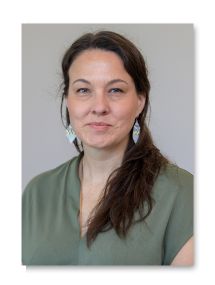
Dr. Nicole Redvers, DPhil, ND, MPH, is a member of the Denı́nu Kų́ę́ First Nation (Northwest Territories, Canada), and is an Associate Professor, Western Research Chair, and Director of Indigenous Planetary Health at the Schulich School of Medicine & Dentistry at Western University. She also currently serves as the Vice President Research at the Association of Faculties of Medicine of Canada (AFMC). Dr. Redvers has had previous appointments in both the Department of Family & Community Medicine and the Department of Indigenous Health at the University of North Dakota where she helped co-develop the first Indigenous Health PhD degree program in North America. She has been actively involved at regional, national, and international levels promoting the inclusion of Indigenous perspectives in both human and planetary health research and practice.

Dr. Sean Kidd is a co-director and senior scientist with the Institute for Mental Health Policy Research at the Centre for Addiction and Mental Health (CAMH) and a professor in the University of Toronto's Department of Psychiatry.
Bios
The Kabenguetan Dance Troupe is an intergenerational collective established in 2022. It is composed of Indigenous immigrants from Benguet Philippines who aim to preserve and revitalize Indigenous Cordilleran culture in Canada. Rooted in the values of interrelatedness and interconnectivity, the group uses traditional dance—such as the Bindiyan and Tayaw—as a living practice for storytelling and passing down ancestral knowledge. Through performances and intercultural exchange, they celebrate Kabenguetan identity while sharing the rich heritage of the Igorot people with the broader Canadian community. View all the Kabenguetan Dance Troupe participant bios (PDF).
Home Base Yellowknife is a community organization that supports young people who are experiencing homelessness, housing instability, or other forms of marginalization in the Northwest Territories. View all the HomeBase Yellowknife participant bios (PDF).
Participatory action project films
Suggested readings
- Reed, G., Fox, S., Littlechild, D., McGregor, D., Lewis, D., Popp, J., Wray, K., Kassi, N., Ruben, R., Morales, S., and Lonsdale, S. (2024). For our future: Indigenous resilience report (PDF). Natural Resources Canada, Ottawa, ON, Canada.
- Kabenguetan Dance Troupe bios (PDF)
- HomeBase Yellowknife bios (PDF)
Webinar resources