mite achimowin - Heart Talk
mite achimowin (Heart Talk): First Nations Women Expressions of Heart Health
Updated October, 2019
The mite achimowin (Heart Talk): First Nations Women Expressions of Heart Health study received funding from the CIHR (Canadian Institutes of Health Research; Aboriginal People’s Health Institute) and SSHRC (Social Sciences and Humanities Research Council) through the Urban Aboriginal Knowledge Network in partnership with Nanaandawewigamig. The study, which took place in Winnipeg over 2015-2016, was a collaboration between the University of Winnipeg and the University of Manitoba.
mite achimowin means ‘heart talk’ in Cree. The mite (heart) achimowin (talk) concepts carry wisdom of teachings that involve connections between a person’s physical body, mind and spirit. According to mite teachings, at birth the Creator provides a gift of the heart to every human being. It is recognized that there would be no life without the heart. It is where a person derives their emotions and intelligence. A holistic view of the heart includes an understanding of how to care for the psychological, spiritual, physical, and emotional wellbeing.
Doris Young and Esther Sanderson

There were two phases of the project. The first phase brought together six First Nations women from across Manitoba for one week. Over this period, the women participated in learning circle discussions to explore and express their experiences related to their own heart health or caring for a relative with a heart health issue. From these discussions, the women produced digital stories (3–5 minute videos) touching upon various themes affecting First Nations heart health including: transitions from traditional to westernized lifestyles and diets; the trauma of residential schools; racism; access to medical care; culturally unsafe health care; subjugation of culturally-rooted medicines, and economic and geographic marginalization.
The second phase involved presenting the videos to over 200 undergraduate students in medicine and nursing at the University of Manitoba. The students then participated in facilitated dialogue sessions so they could share their thoughts on the videos and discuss ways to integrate Indigenous concepts of mite (heart) knowledge and patients’ experiences with biomedical knowledge and practice. To learn more about the project, see the video mite achimowin: Heart Talk – First Nations Women’s Expressions of Heart Health Digital Story Research Project. This video introduces Indigenous and biomedical models that lend to heart health and wellness from the perspectives of the project collaborators and digital storytellers. Notably, the video and the digital stories point to the importance of relationships (wahkotowin) in order to be able to achieve mino-pimatisiwin (a good life).
 Lorena Fontaine, Annette Schultz and Lisa Forbes.
Also featured is a podcast recorded with the mite achimowin (Heart Talk) project team, including co-investigators Lorena Fontaine (University of Winnipeg) and Dr. Annette Schultz (University of Manitoba) and project coordinator Lisa Forbes. This audio recording provides an overview of the project and the main themes that resulted from the project. The research team acknowledges research collaborator Ivan Berkowitz, who enthusiastically introduced Lorena and Annette to each other and encouraged the mite achimowin project even in his final days.
Finally, a paper titled Understanding First Nations women’s heart health was developed to examine the context of First Nations women’s heart health with a specific view to understanding the role that colonization has played in the prevalence of and risk factors for heart diseases, and in diagnosing and treating them. The paper also looks to strategies that might help to close the gap in First Nations women’s heart health.
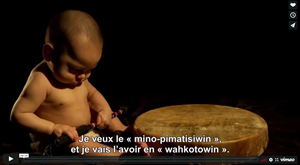 Introduction - Digital Story Research Project
The short video mite achimowin: Heart Talk – First Nations Women’s Expressions of Heart Health Digital Story Research Project, provides an introduction to the project and Indigenous and biomedical models that lend to heart health and wellness.
Watch the video
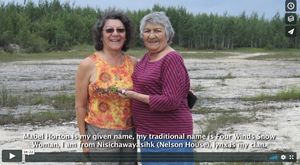 Christina Baker and Mabel Horton
Christina Baker (right) and Mabel Horton (left) both live in Winnipeg. Christina is Cree from Split Lake (Tataskweyak Cree Nation) which is 900 kilometers north of Winnipeg. She and her family members have heart health issues. Mabel is Christina’s niece. She is Cree and a member of Nisichawayasihk First Nation (Nelson House) located 850 kilometers north of Winnipeg. She cares for family members with heart health issues. Their collaborative video features images from their family camp. They describe the importance of traditional foods, physical activity, and ways of being healthy. Christina and Mabel narrate their story in their first language – Cree – to talk of the importance today of eating well and keeping active.
Watch the video
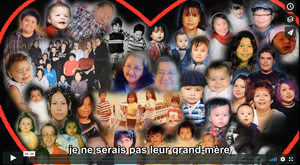 Eliza Beardy
Eliza Beardy is Oji Cree from Wasagamack First Nation, Manitoba, a fly-in community 600 kilometers north of Winnipeg. She currently lives in Winnipeg and cares for family members with heart health issues. Eliza’s video features images of her parents, children, grandchildren, and great grandchildren as she describes the importance of family relationships and bonds to heart health. As a residential school survivor, she speaks of the lasting heart break experienced by parents and children as a result of separation due to residential schools.
Watch the video
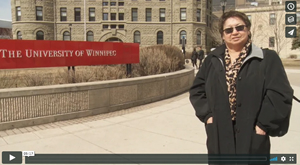 Virginia Mckay
Virginia McKay is Saulteaux and lives in Berens River First Nation, Manitoba, which is a fly-in community 270 kilometers from Winnipeg. She and a family member have heart health issues. Virginia shares two short stories. The first describes the enduring love and pride of her grandchild and the importance of the family relationship and values. Her second story features the landscape of Berens River First Nation and a story of racial discrimination experienced by a family member as he sought medical care for a serious health issue.
Watch the video
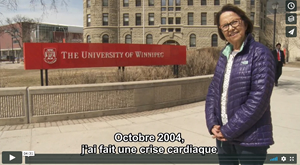 Esther Sanderson
Esther Sanderson is Cree from Opaskwayak Cree Nation (the Pas, Manitoba). The Pas is 630 kilometers north of Winnipeg. Her video describes her personal journey of the spirit and mind during her heart transplant surgery. She also shares the importance of family bonds and cultural knowledge during her recovery.
Watch the video
NCCIH Influenza papers
In 2013 the six National Collaborating Centres for Public Health initiated a two-year project on Influenza and Influenza-Like Illness (ILI). As part of this collaborative project, the NCCIH produced three papers in order to understand how influenza, such as the 2009 H1N1 pandemic, is particularly experienced by Indigenous populations in Canada; the knowledge gaps in the epidemiological research related to influenza and Indigenous peoples; and how public health responses can be better tailored to the unique needs and characteristics of Indigenous peoples and communities. The three papers in this series include:
- The 2009 H1N1 influenza pandemic among First Nations, Inuit and Métis peoples in Canada: Epidemiology and gaps in knowledge
(See also: Plain language summary)
- Determinants of the prevalence and severity of influenza infection in Indigenous populations in Canada
(See also: Plain language summary)
- Pandemic planning in Indigenous communities: Lessons learned from the 2009 H1N1 influenza pandemic in Canada
(See also: Plain language summary)
The first paper in this series synthesized available evidence on the impact of the 2009 H1N1 influenza pandemic on First Nations, Inuit and Métis peoples in Canada. The review highlights gaps in knowledge in the epidemiological research and looked at the unique challenges faced by Indigenous people and communities during the 2009 H1N1 influenza outbreak. Understanding the epidemiology of the 2009 H1N1 influenza pandemic is important for determining which populations are especially vulnerable to severe outcomes and to provide guidance on how to prepare for, and respond to, pandemic events in the future.
The second paper, a literature review, examines the factors which may contribute to the prevalence and severity of influenza infection among Indigenous peoples and communities. Understanding why Indigenous people are vulnerable to severe outcomes from large scale outbreaks of influenza like the 2009 H1N1 influenza pandemic is important not only for informing pandemic planning for future outbreaks, but also for developing policies and programs to address deeply rooted socio-economic, political and health services inequities. The factors that may affect Indigenous peoples’ vulnerability to influenza infection may affect other populations as well, and thus the findings from the literature review may be more broadly generalizable.
The third paper in this series focuses on the public health response to the 2009 A/H1N1 influenza pandemic in Indigenous communities. This pandemic was particularly severe in Indigenous communities and highlighted the multiple challenges Indigenous peoples continue to face to improve their health and well-being. The paper identifies lessons learned from the public health response to this influenza pandemic and makes recommendations for pandemic planning. Key lessons learned revolved around the need to ensure that public health responses in future pandemics are efficiently and effectively implemented in Indigenous communities and the need to implement broader policy changes to address continued socio-economic, political and health services inequities. As well, in order to achieve more effective public health pandemic (and other emergency) response in the future, the paper recommends that pandemic responses be tailored to the unique characteristics of Indigenous communities.
Additional NCC documents in this series are available at: https://nccid.ca/project-stream/influenza/
An Introduction to the Health of Two-Spirit People
Two-Spirit health initiatives
Two-Spirit is a term that encompasses a broad range of sexual and gender identities of Aboriginal peoples, including those who identify as lesbian, gay, bisexual, transgender, or queer (LGBTQ). This paper, authored by Dr. Sarah Hunt, introduces the historical, contemporary and emergent issues related to Two-Spirit health. Integral to this discussion is that Two-Spirit health is understood within the context of colonialism and heteropatriarchy, as well as in the current resurgence of Two-Spirit peoples’ gender roles and sexual identities.
The paper includes six sections:
- 1. Introduction to the diversity of Two-Spirit roles and identities within Aboriginal cultures
- 2. Discussion of the impacts of colonization on Aboriginal peoples’ gender roles and sexuality, including the decline of previously revered spaces occupied by Two-Spirit peoples (i.e. knowledge keepers, healers, herbalists, child minders, spiritual leaders, interpreters, mediators and artists)
- 3. Overview of the social determinants of Aboriginal peoples’ health, with a particular view to understanding the experiences of Aboriginal lesbian, gay, bisexual, trans, queer and Two-Spirit (LGBTQ2S) people (i.e. homophobia and heteronormativity, systemic invisibility, and urbanity and mobility)
- 4. Presentation of available research on the health and well-being of Two-Spirit people (i.e. mental health, substance abuse, violence, and HIV/AIDS)
- 5. Review of the health of Two-Spirit youth using a strengths-based approach
- 6. Discussion of the resiliency, resurgence, and acknowledgement of Two-Spirit roles and identities as vital to improving their health and well-being
Two-spirit people are an underserved population. Improving their health and well-being requires that their voices, needs and identities are central to any Two-Spirit health initiatives, and that their experiences are included in Aboriginal health research, policy, and programming.
Intended as an introductory paper for health practitioners, Indigenous community members and researchers working in areas of Indigenous health, gender and sexuality, Hunt concludes with a listing of additional sources of information on Two-Spirit people and health, including educational resources, books and journals.
Post-traumatic stress disorder (PTSD), anxiety and depression among Aboriginal peoples in Canada
A mental health series

As part of a mental health series produced by the National Collaborating Centre on Aboriginal Health (NCCIH), authors Sherry Bellamy and Cindy Hardy explore post-traumatic stress disorder (PTSD), anxiety and depression among Aboriginal peoples in Canada.
The first paper entitled, Post-Traumatic Stress Disorder in Aboriginal People in Canada: Review of Risk Factors, the Current State of Knowledge and Directions for Further Research, indicates that Aboriginal people in Canada are more likely than non-Aboriginal people to experience traumatic events in their lifetimes including historical, collective and individual trauma. Demographic, individual and environmental factors, such as being female, stressful living conditions, poverty and violence, all contribute to increased risk for developing PTSD among Aboriginal populations. In addition to the review of potential risk factors, the paper overviews the current knowledge, prevalence, health impacts, resilience and treatment options of PTSD within an Aboriginal context. Finally, resources for Aboriginal peoples seeking help for and/or information about PTSD is listed at the end of the report.
The second paper, Anxiety Disorders and Aboriginal Peoples in Canada: The Current State of Knowledge and Directions for Future Research, reviews the limited but relevant literature on anxiety and Aboriginal peoples in Canada. The paper touches upon a diversity of subjects related to anxiety including:
- the prevalence and multiple risk factors for the development of anxiety disorders amongst Aboriginal children, youth and Aboriginal people living in urban centres;
- Indigenous and Western models of mental health wellness;
- associations between anxiety and adult outcomes such as alcohol use and depression;
- links between physical health and anxiety;
- resilience factors in Aboriginal populations;
- the assessment, diagnosis and treatment for Aboriginal people suffering from anxiety; and
- intervention, prevention and treatment programs for anxiety.
The paper concludes with a listing of resources for Aboriginal peoples seeking help for and/or information about anxiety.
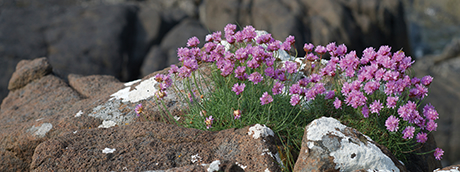
Studies have found that compared to the general population, depression rates for Aboriginal people are higher for both males and females residing either on or off reserve. The third paper, Understanding Depression in Aboriginal Communities and Families, provides a brief outline of symptoms of depression, followed by a discussion of depression across cultures and the known prevalence of depression among Aboriginal peoples in Canada. Selected risk factors for depression are also considered within the historical and contemporary experiences of Aboriginal peoples, including colonization and forced assimilation; disrupted relationships and connection to family; physical, psychological, sexual and spiritual abuse; and the intergenerational transmission of abuse. Finally, the paper concludes with an examination of some health consequences related to depression and Western and Aboriginal approaches to healing.
All three papers in this series call for more research in a number of areas related to mental health and Aboriginal peoples. The following areas are identified as in need of further investigation:
- the prevalence, stressors, risk factors, and health implications of PTSD, anxiety and depression;
- the cultural factors that foster resilience in Aboriginal communities; and
- the opportunities for interventions that honour Aboriginal holistic values and traditions, promote resilience, heal families and communities, improve collective health and well-being, and reduce environmental factors that perpetuate trauma within communities.
The nutritional health of First Nations and Métis of the Northwest Territories
At the core of the National Collaborating Centre for Indigenous Health’s new publication, The nutritional health of First Nations and Métis of the Northwest Territories: A review of current knowledge and gaps, is the acknowledgement of a growing crisis of chronic diseases, including obesity and diabetes, which has reached epidemic proportions in some Aboriginal communities. Unhealthy weights resulting from low levels of physical activity and poor nutrition can be attributed to the rapid social, cultural and environmental changes that Aboriginal peoples have experienced throughout recent history.
Traditional foods are an important part of Aboriginal peoples’ diets. However there has been a noticeable nutritional shift whereby a greater proportion of their daily diets is comprised of market foods, many of which are nutrient poor and high in cost. This is happening despite evidence which points to greater nutrition found in traditional foods compared to market foods, as well as the innumerable cultural, economic, social and health benefits of harvesting and consuming traditional foods.
This report summarizes current knowledge about the nutritional health of First Nations and Métis people in the NWT and identifies research gaps. Despite comprising the majority of the Aboriginal population in the NWT, First Nations and Métis have been overlooked in research related to diet, nutrition, and their association with health and well-being. Because much of the research has thus far focused on Inuit and Inuvialuit, there remain considerable gaps in knowledge related to understanding the impacts of transitioning diets on the health of First Nations and Métis within this region. This is particularly true for research on how their traditional food systems, food security, and health are affected by climate change and environmental contamination.
The report comprises two substantive sections. The first describes the nature of literature identified from a search of academic databases and Google Scholar on the nutritional health of First Nations and Métis in the NWT, including publication trends over time, priority topics and sub-populations of interest. This literature spanned from 1980 to 2014 and included 103 peer and non-peer reviewed papers. The second section provides an overview of current knowledge about the nutritional health of this population, drawing on findings from literature identified in the first section, supplemented with information from broader sources, including literature focused on Inuit or general northern populations, to the extent that it had relevance for First Nations and Métis in the NWT. The nutrition transition among First Nations and Métis in the NWT; the importance of traditional foods in their diets; levels of nutrient intakes and deficiencies; and issues related to food security are discussed.
Complementing the review of the literature, the report also examines health promotion initiatives in the NWT, including programs or initiatives to increase the affordability and availability of healthy market foods; community wellness and intergenerational knowledge sharing; harvester support and sustainable wildlife management; poverty reduction and community economic development; innovation in infrastructure, transportation and local food production; and youth engagement.
Findings
Proportionally, few studies were identified from the literature search which examined differences – be they linguistic, age, gender, or geographic – in the nutritional health of specific sub-populations. There were also no studies that examined differences based on socio-economic status. However, the research does show a trend towards increasingly substituting traditional foods with market foods, particularly by younger generations, and the role that age, gender, geography, socio-economic status and individual food preferences play in this. It highlights the existence of some nutritional deficiencies in First Nations and Métis, and the nature and extent of food insecurity.
Nevertheless, there remains a considerable gap in knowledge related to patterns of traditional and market food consumption, determinants of nutrient deficiencies, levels of contaminants in traditional food sources over time and across space, the impact of climate change on the quality and availability of specific traditional foods, the prevalence of chronic diseases associated with diet and nutrition, and the effectiveness of various health promotion programs and initiatives. In particular, the report calls for more research to respond to the diversity of Aboriginal peoples in the NWT, including the impact of socio-economic status and location of residence, so that more targeted and effective health promotion programs and initiatives can be implemented.
Traditional Aboriginal Diets and Health
From moose stew to berries and bannock: health and diets linked
December 2011 - Cynthia Munger's always got something on the stove in her home community in northern BC. This year, she was counting on local hunters to provide two moose so that she could smoke meat and prepare moose meat stew - with as many people in the community as she could round up.

Her willingness to cook with young mothers and Elders in her Stellaten First Nation community has proven so popular, she's now sharing canning, cooking and healthy eating skills with more than 10 of the communities in the Carrier Sekani territories. She learned her own skills from her grandparents - and especially from her grandmother Marian Luggi, and from her uncles who provided wildlife meat and fish.
"We have a huge diabetic population, and the majority of our people have Type II diabetes," said Munger, a community health representative whose dedication to healthy eating education led to national recognition from the National Diabetes Association in 2006. "This is a lifestyle change back to traditional diets."
Traditional Aboriginal foods - such as Munger is supporting in her community - offer cultural, social and nutritional benefits that contribute to the health of Aboriginal peoples and communities through a variety of complex pathways. Yet, changed patterns of consumption are increasing the risk amongst Aboriginal peoples of developing cardiovascular disease, diabetes and cancer.
Health benefits and barriers to traditional Aboriginal diets
A new
NCCIH evidence review by Dr. Lynda Earle, Medical Officer of Health in Nova Scotia, offers insights on the role of traditional Aboriginal diets and health to support interventions that can help prevent chronic disease in Aboriginal communities. The report is based on surveys of peer-reviewed and non-academic literature sources and touches on:
- current consumption patterns in Aboriginal communities
- health benefits associated with traditional diets
- the challenges of promoting traditional dietary practices
- examples of how traditional diets can be supported in Aboriginal communities.
Among the highlights: Evidence indicates a link between dietary factors - such as omega-3, folate, and vitamin B12 - and the mental health of circumpolar people. Studies also show that, although the amount of traditional food consumed over time has declined, groups such as Elders and older Aboriginal people consume 'country food' more than younger people, and hunting and trapping remains a way of life for a third of James Bay Cree.
Barriers to access
Food security
The review addresses barriers that restrict access to traditional plant and animal resources, including food insecurity issues and environmental concerns. For instance, the ability of Aboriginal peoples living off reserve to obtain nutritionally adequate foods is getting worse, increasing from 27% in 1998-99 to 33% by 2004-05.
Among Inuit, the issue is also recognized as a chronic problem. A
2010 article in the Canadian Medical Association Journal found nearly 70% of Inuit preschoolers resided in households that were rated as food insecure, and concluded there was a 'high prevalence of household food insecurity, with a substantial proportion of children with severely food insecure status."
Factors affecting access to traditional food are complex, and include income, education, social structures, food preferences and accessibility of traditional and market food choices. Issues associated with the traditional sharing of labour in food gathering, or with the cost and requirements for gun licensing associated with hunting activities, are examples of changing social structures that can further limit access.
Environmental health
Country food has also been associated with concerns about environmental contaminants in the food chain. A 10-year First Nations Food, Nutrition and Environment Study currently underway in Canada is working with 100 randomly selected First nations communities across the country to better understand the nutritional and environmental factors affecting health and well-being. Information is being gathered on aspects such as the current use of traditional and store-bought food, food security (availability and affordability of safe nutritious food); the levels of both nutrients and environmental chemicals in many traditional foods; and the presence of heavy metals in drinking water and pharmaceutical by-products in surface water.
The results of the first study, which focused on BC and was conducted with the full participation of 21 BC First Nations communities, revealed that although there tend to be higher risks of obesity and related illness in First Nations communities, the risks lessen at times when traditional foods are consumed. The study is funded by Health Canada, with participation from UNBC, the Assembly of First Nations, and the Université de Montréal.
The Centre for Indigenous Peoples' Nutrition and Environment (CINE), affiliated with McGill University, is another initiative aiming to address concerns about the integrity of traditional food systems. As noted in the NCCIH report, the Inuit community of Pangnirtung has been part of a CINE-associated project encouraging a return to a healthy diet of country food like seal, caribou, narwhal and beluga. Pangnirtung is one of 12 Indigenous communities, including the Gwich'in in the Northwest Terriotories and the Nuxalk Nation in BC, that are using traditional knowledge, story telling and country food to support returns to healthy diets. Project findings were published in a book: Indigenous Peoples" Food Systems: the many deminsions of culture, diversity and environment for nutrition and health (Rome: Food and Agriculture Organization of the United Nations and CINE, 2009).
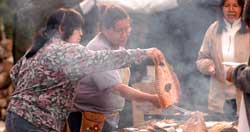
As illustrated in our NCCIH slideshow above, country food is increasingly a feature of community events and services - whether in rural First Nations communities, at Inuit gatherings in downtown Ottawa, or at leading hospitals like Sioux Loukout's Meno Ya Win Health Centre where patients are offered caribou stew and other traditional foods as part of a culturally relevant approach to health.