-
NCCIH seasonal newsletter
Our seasonal e-newsletters are a free, reliable, one-stop-shop of the latest NCCIH news, events, and knowledge products, as well as a curated list of pertinent resources on Indigenous health produced by organizations from
across Canada.
Browse Sign up
-
Healthy Land, Healthy People Collection
The Healthy Land, Healthy People Collection contains resources emphasizing connections between land and health, and the importance of these connections to attain the best possible health outcomes for First Nations, Métis and Inuit peoples.
Browse collection
-
Tuberculosis Collection
The Tuberculosis (TB) Collection is a searchable repository containing hundreds of external resources related to tuberculosis and the health of First Nations, Inuit and Métis populations in Canada.
Browse collection
-
Early Child Development Collection
The Early Child Development Collection is a selection of external resources pertaining to the health and well-being of First Nations, Inuit, and Métis children and their families.
Browse collection
-
Cultural Safety Collection
The Cultural Safety Collection is a searchable repository of resources related to addressing barriers in accessing health and social services for First Nations, Inuit and Métis individuals due to their experiences with racism, discrimination, and marginalization.
Browse collection
WELCOME TO THE NCCIH
The National Collaborating Centre for Indigenous Health (NCCIH) is a national Indigenous organization established in 2005 by the Government of Canada and funded through the Public Health Agency of Canada (PHAC) to support First Nations, Inuit, and Métis public health renewal and health equity through knowledge translation and exchange. The NCCIH is hosted by the University of Northern BC (UNBC) on the traditional territory of the Lheildli T’enneh in Prince George, BC.
NEW NCCIH PUBLICATIONS & MULTIMEDIA
Highlights & News
-
-

Canada’s journey of truth and reconciliation
Published 2026-09-30
The National Collaborating Centre for Indigenous Health (NCCIH) joins other Indigenous organizations in honouring and remembering the survivors of residential schools as well as the children who never came home from them, and reflecting upon the on-going, intergenerational impacts of the schools on Indigenous individuals, families, and communities throughout the country.
-

Launch of six-part series of healthy aging booklets for First Nations, Inuit, and Métis adults
Published 2026-09-13
In the fall of 2025, the NCCIH began work on a series of healthy aging booklets for First Nations, Inuit, and Métis adults (18-49 years) and older adults (50+years) in Canada. The booklets were developed in response to requests from Indigenous families and community partners for culturally relevant resources to support the health and well-being throughout the aging process.
-
-
August 9 - International Day of the World’s Indigenous People
Published 2026-08-09
The International Day of the World’s Indigenous Peoples was created to raise awareness of the needs of the estimated 476 million Indigenous Peoples living around the world. Indigenous Peoples speak the overwhelming majority of the world’s estimated 7,000 languages, yet they are “amongst the most disadvantaged” populations in the world, requiring special measures to protect their rights as ...
-

The NCCIH is seeking Research Associates
Published 2026-07-16
The NCCIH invites applications for the position of Research Associate to support research and knowledge translation activities related to First Nations, Inuit, and Metis public health, including identifying, analyzing, synthesizing, and disseminating scientific, Indigenous and other knowledges to promote and improve the use of evidence in public health decision-making, policy and practice.
-

July 9 - Nunavut Day
Published 2026-07-09
Nunavut Day commemorates the signing of the Nunavut Land Claims Agreement Act and the Nunavut Act on July 9, 1993. These pieces of legislation were critical for creating Nunavut as a distinct territory in Canada in 1999 and protecting Inuit rights to their land, culture, and self-determination.
-

June 21 – National Indigenous Peoples Day
Published 2026-06-21
National Indigenous Peoples Day generally takes place on the summer solstice. For generations, many First Nations, Inuit and Métis communities have celebrated their cultures, languages, and traditions at this time of year. The summer solstice holds deep spiritual and cultural significance for many Indigenous Peoples, marking a time of renewal, connection, and celebration.
-
June - National Indigenous History Month
Published 2026-06-01
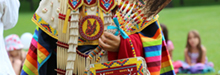
During National Indigenous History Month, Canadians across the country are encouraged to participate in Indigenous-led events, activities, and learning opportunities to better understand the First Nations, Inuit, and Métis communities around them. Through storytelling, Pow Wows, and art exhibits, Indigenous communities give their non-Indigenous neighbours access and insights into their histories and tradit...
-

May 10 - Bear Witness Day
Published 2026-05-10
Bear Witness Day is a reminder that First Nations children continue to experience inequities when accessing health, social, and educational services.
-
UNBC and the NCCIH extend partnership
Published 2026-05-08
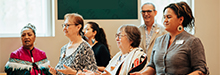
The University of Northern British Colombia (UNBC) and the National Collaborating Centre for Indigenous Health (NCCIH) have signed a Memorandum of Understanding to renew their decades-long collaboration.
-

May 5 - Red Dress Day
Published 2026-05-05
Red Dress Day provides the opportunity to raise awareness, show solidarity, and support efforts and movements to end violence related to Indigenous women, girls, and 2SLGBTQQIA+ people.
-

April 10 - National Indigenous Nurses Day
Published 2026-04-10
Canada’s National Indigenous Nurses Day, celebrated each year on April 10th, is a powerful celebration that honours the dedication, resilience, and cultural wisdom of Indigenous nurses across the country.
-
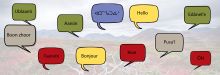
March 31 - National Indigenous Languages Day
Published 2026-03-31
Canada’s National Indigenous Languages Day, held annually on March 31st, is a day to celebrate and honour the diverse Indigenous languages that form an important part of the country’s cultural and linguistic heritage.
-
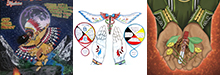
ISC and NCCIH communicable disease prevention art galleries
Published 2026-03-30
The ISC and the NCCIH are pleased to announce the launch of five learning galleries, which are multimedia showcases of First Nations, Inuit, and Métis artworks sharing grassroots perspectives on preventing communicable diseases.
-

Inuit resource booklets for parents and care-givers of children (0-6 years), additional dialects
Published 2022-01-11
Updated 2026-03-09
The NCCIH is pleased to share two additional dialects for the Inuit booklets for parents and caregivers of children up to 6 years of age. Grounded in Inuit Qaujimajatuqangit, these resources give practical information to support parents in early childhood learning and healthy development, and ultimately to strengthen Inuit families and communities for generations to come.
-
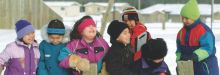
February 21 - International Mother Language Day
Published 2026-02-21
International Mother Language Day serves to recognize and further efforts to safeguard linguistic diversity, promote multilingualism, and enhance multilingual education.
-

January 4 - National Ribbon Skirt Day
Published 2026-01-04
Ribbon Skirt Day encourages Indigenous women, girls, and gender-diverse people across Canada to wear their traditional regalia to honor their culture and showcase the strength, pride, and identity that these garments symbolize.
-
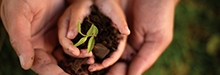
Indigenous early learning and child care knowledge resources
Published 2025-12-13
The National Collaborating Centre for Indigenous Health (NCCIH), with support from Employment and Social Development Canada (ESDC), has developed a series of knowledge resources to inform and strengthen programs and policies designed to serve families with young children in First Nations communities.
-
-

Call for Advisory Committee members
Published 2025-11-14
The National Collaborating Centre for Indigenous Health (NCCIH) is seeking new members to serve on its Advisory Committee. We invite expressions of interest from First Nations, Inuit, and Métis individuals across Canada who are committed to improving public health and health equity for Indigenous Peoples. Please apply by December 8, 2025.
-

NCCIH celebrates 20 years of “Remaining visionary”
Published 2025-10-30
On May 7th 2025, the National Collaborating Centre for Indigenous Health held a 20th anniversary celebration in Prince George, BC, that brought together former and current leaders, Advisory Committee members, staff members, and representatives of organizations nationally and internationally that support and share the NCCIH’s vision.
-
-
-
-
Winners of the ISC and NCCIH communicable disease prevention art contest
Published 2025-04-16
We are pleased to showcase the winning artworks of the Indigenous Services Canada (ISC) and National Collaborating Centre for Indigenous Health (NCCIH) Communicable Disease Prevention Art Contest. We received 148 entries, and our panel of ISC, NCCIH, and community representatives selected these three entries as the contest winners.
-

ISC and NCCIH call for artworks - New deadline
Published 2025-01-23
Indigenous Services Canada (ISC) and the National Collaborating Centre for Indigenous Health (NCCIH) are seeking artworks by Indigenous Peoples and Indigenous organizations to feature in upcoming communicable disease prevention and awareness campaigns, social media, key messaging and other resources.
-
-

The NCCIH is seeking an Indigenous Academic Lead
Published 2024-10-15
The National Collaborating Centre for Indigenous Health is seeking a visionary and results-oriented Indigenous leader to carry forward our work to strengthen public health systems and advocate for health equity for First Nations, Inuit, and Métis peoples in Canada.
-
.jpg)
The H.E.A.L. Healthcare Project
Published 2024-08-16
Starting from the premise that healthcare is both an art and a science, H.E.A.L. Healthcare uses poetry, storytelling, visual arts, and other creative tools to confront oppressive healthcare biases, to understand patient experiences, and to humanize healthcare systems and cultures.
-
-
-
-

Former Academic Lead Dr. Margo Greenwood elected Member of the RSC
Published 2023-09-11
Former Academic Lead of the National Collaborating Centre for Indigenous Health (NCCIH) Dr. Margo Greenwood O.C. has been elected Member of the Royal Society (RSC) of Canada. She joins a cohort of 58 new College Members of the RSC chosen by their peers in recognition of outstanding scholarly, scientific, and artistic achievements.
-
-

The NCCIH announces new Academic
Co-Leads
Published 2023-02-01
Dr. Sheila Blackstock and Dr. Daniel Sims, both Indigenous scholars and Associate Professors at the University of Northern British Columbia, will begin their new roles as Academic Co-Leads of NCCIH on February 1, 2023.
-
-
-

Dr. Margo Greenwood appointed as Senator
Published 2022-11-10
Her Excellency the Right Honourable Mary Simon, has appointed Dr. Margo Greenwood as an independent Senator, filling a vacancy for British Colombia.
-
-
-
-
-
-
-

A Vision for the Future: First Nations, Inuit and Métis Population and Public Health
Published 2021-12-15
Visioning the Future: First Nations, Inuit, and Métis Population and Public Healthreveals a pathway to a healthy tomorrow by addressing population and public health challenges for Indigenous Peoples in several areas: the environment; infectious diseases; data and governance; mental wellness; and social determinants of health.
-

An open letter to healthcare workers from the NCCIH
Published 2021-10-04
In this open letter, the NCCIH expresses its support and solidarity with healthcare workers and patients accessing healthcare. In the words of BC's Provincial Health Officer, Dr. Bonnie Henry, we must "be kind, be calm, and be safe" as we weather the fourth wave of this pandemic.
-
-
-

Closing the Gaps for Indigenous Peoples
Published 2021-04-28
The NCCIH takes a closer look at the federal budget that commits to $18 billion in spending over the next five years for First Nations, Inuit, and Métis communities.
-

Vaccine Mistrust: A Legacy of Colonialism
Published 2021-04-08
Acknowledging and supporting Indigenous peoples’ right to self-determination – the right to choose – is a critical step in addressing COVID-19 vaccine mistrust.
-
Supporting vaccine confidence in Indigenous peoples
Published 2021-04-01
These five fact sheets help support vaccine confidence amongst First Nations, Inuit and Métis peoples and communities. Additional links to video and trusted web sites on vaccines are provided in each of the fact sheets.
-
NCCIH Media Release - January 14, 2021
Published 2021-01-14
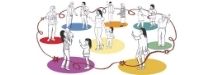
The NCCIH and Northern Health BC have jointly launched a short animated video to draw attention to the ongoing issue of stigmatization experienced by Indigenous people in the health care system.
-

NCCIH Media Statement
Published 2020-12-03
The release of Mary-Ellen Turpel-Lafond's report "In Plain Sight" is a call to action to address racism directed at Indigenous people as a national health crises, says NCCIH Academic Leader, Margo Greenwood.
-
NCCIH Virtual Series
Published 2020-12-17
The National Collaborating Centre for Indigenous Health (NCCIH) is pleased to present a four-part virtual series that will look at First Nations, Inuit and Métis peoples and communities’ experiences with COVID-19.
-

NCCIH selected as Common Vision Champion
Published 2021-02-07
The NCCIH has been selected as a Common Vision Champion. The goal of the NCCIH’s project as Champion is to facilitate cross-sector partnerships and collaboration to help collectively guide planning and implementation of integrated approaches to promote healthy living, including increased physical activity in First Nations, Inuit, and Métis communities.
-

CPS Module Launch
Published 2020-07-21
The Canadian Paediatric Society (CPS) has launched a revised Indigenous Child and Youth Health Curriculum. The revised curriculum is based on a culmination of feedback from paediatric faculty, learners and expert reviewers.
-

NCCIH Media Statement
Published 2020-06-27
The government of British Columbia has opened an investigation into reports that BC emergency room health professionals played ‘guessing games’ about the blood alcohol content of Indigenous patients. This kind of discriminatory behaviour needs to stop, right now. Then, we must figure out how to prevent this from ever happening again.
-

NCCIH Indigenous Health Researchers Database
Published 2019-05-28
The Indigenous Health Researchers Database was created to help identify researchers with expertise in a wide variety of topics related to the health of Indigenous (First Nations, Inuit and Métis) peoples in Canada. Originally compiled in 2014, and available as a PDF, Aboriginal Health Researchers at Canadian Universities became a digitized online resource in 2017. To ensure the database remains a relevant,...
-

Same centre - new name!
Published 2019-05-23
As of May 30th, 2019, the National Collaborating Centre for Aboriginal Health (NCCAH) will officially adopt a new name, the National Collaborating Centre for Indigenous Health (NCCIH). While ‘Aboriginal’ is an umbrella term which often homogenizes the diversity of Indigenous populations in Canada, the term ‘Indigenous’ is considered is to be more respectful as it acknowledges Indigenous pe...
-
A fourth forum on Indigenous determinants of health
Published 2019-03-28
A short narrative report, and companion digital video, of the fourth and final NCCAH forum with national Indigenous organizations on the social determinants of Indigenous Peoples’ health, held November 28 and 29, 2017, in Ottawa, Ontario. This forum, “Nakistowinan (Stop In) – Pimicisok (Stock Up) – Kapesik (Stay Over)”, focused on the TRC’s Calls to Action towards reconciliatio...
-

Launch of the BC First Nations and Métis parenting booklets
Published 2019-01-23
The First Nations Health Authority (FNHA) and the National Collaborating Centre for Indigenous Health (NCCIH) are pleased to re-launch four resources for First Nations and Métis parents and caregivers in British Columbia.
-

The Indigenous Early Learning and Child Care Framework
Published 2019-06-04
The NCCIH is pleased to announce the appointment of Dr. Margo Greenwood as a member of a new Federal Government Expert Panel on Early Learning and Child Care Data and Research, announced by Employment and Social Development Canada in a press release, June 4, 2019.
-

NCCIH partners on a SSHRC/CIHR five-year initiative
Published 2018-11-05
The National Collaborating Centre for Aboriginal Health (NCCAH) is a major partner on a new five-year initiative entitled, "Cultural Agility in Northern BC’s Healthcare System: Increasing Indigenous Employment Participation and Responsiveness to Indigenous Well-being", launched October 1, 2018 at the Two Rivers Gallery in Prince George, BC.
-

Challenges in health equity for Indigenous peoples in Canada
Published 2018-02-23
In their commentary on two papers in the Lancet’s Series on Canada, authors Greenwood, de Leeuw and Lindsay draw attention to the persistent health inequities experienced by First Nations, Inuit and Métis peoples, despite Canada’s commitment to addressing health equity both domestically, through its universal healthcare system, and internationally.
-

Canadian Family Physician Cover Stories 2017
Published 2017-12-19
Dr. Sarah de Leeuw has been writing a series of monthly cover stories for Canadian Family Physician (CFP) since 2016. These stories feature anecdotes and real world examples of initiatives being undertaken by physicians across Canada who are making a difference in how health care services and programs are delivered, especially in rural, remote, northern and Indigenous communities.
-

Launch of the Manitoba First Nations and Metis Parenting Booklets
Published 2017-11-20
In celebration of National Child Day (November 20, 2017), Healthy Child Manitoba Office (HCMO), and the National Collaborating Centre for Aboriginal Health (NCCAH) officially launched four new resources for First Nations and Metis parents and caregivers in Manitoba.
-

The NCCIH launches new web site!
Published 2017-10-17
The National Collaborating Centre for Aboriginal Health (NCCAH) is very pleased to announce the launch of our new and improved web site.
The Aboriginal Health Researchers at Canadian Universities resource has now been digitized and is available as a searchable feature on the new web site.
-

mite achimowin - Heart Talk
Published 2019-10-28
The mite achimowin (Heart Talk): First Nations Women Expressions of Heart Health study received funding from the CIHR (Canadian Institutes of Health Research; Aboriginal People’s Health Institute) and SSHRC (Social Sciences and Humanities Research Council) through the Urban Aboriginal Knowledge Network in partnership with Nanaandawewigamig.
-
-
Inuit Qaujimajatuqangit: What Inuit have always known to be true
Published 2016-12-23
Short videos are now being produced by the NCCAH as part of the series, Inuit Qaujimajatuqangit: The role of Indigenous knowledge in supporting wellness in Inuit communities in Nunavut. The first of these videos, "Rhoda’s Dream: Burying the Baby", is now complete.
-

Canadian Family Physician Cover Stories 2016
Published 2016-12-23
In 2016, Dr. Sarah de Leeuw wrote a series of monthly cover stories for Canadian Family Physician. These stories feature anecdotes and real world examples of initiatives being undertaken by physicians across Canada who are making a difference in how health care services and programs are delivered.
-

Global Child Initiative
Published 2016-10-12
The National Collaborating Centre for Aboriginal Health is pleased to announce its support for a new initiative focusing on the rights of Indigenous children. The Global Child Initiative focuses on the development of indicators to help governments monitor and report on the rights of children around the world, both Indigenous and non-Indigenous.
-

The NCCIH Celebrates 10 Years!
Published 2016-06-29
The National Collaborating Centre for Aboriginal Health (NCCAH) proudly celebrates a successful decade of knowledge sharing about Indigenous peoples’ and public health in Canada.
-

An Introduction to the Health of Two-Spirit People
Published 2016-05-17
Two-Spirit is a term that encompasses a broad range of sexual and gender identities of Aboriginal peoples, including those who identify as lesbian, gay, bisexual, transgender, or queer (LGBTQ).
-

Family is the Focus
Published 2016-03-04
The NCCAH is pleased to share the summary report and accompanying DVD from the final national gathering, "Family is the Focus". Taking place on the traditional territories of the Tsleil-Waututh, Squamish and Musqueam Peoples in Vancouver, British Columbia from February 18-20, 2014, participants from across Canada were joined by speakers from New Zealand and the United States. This proceedings report also include...
-

Incredible resiliencies of Indigenous health
Published 2018-12-14
When Determinants of Indigenous Peoples’ Health in Canada: Beyond the Social was released in 2015, it was a first in the field of public health: a book about the health of Indigenous peoples written primarily by Indigenous authors, reflecting a diverse range of Indigenous perspectives, and taking into account a wide array of topics relevant to the health and well-being of Indigenous peoples. The book was ta...
-
Review of Core Competencies for Public Health
Published 2015-06-19
The National Collaborating Centre for Aboriginal Health (NCCAH) is pleased to announce the release of the Review of Core Competencies for Public Health: An Aboriginal Public Health Perspective. In this report, Dr. Sarah Hunt reviews and analyzes the seven categories and appendices of the 2007 Public Health Agency of Canada’s Core Competencies for Public Health in Canada 1.0 within an Aboriginal public healt...
-

Aboriginal Peoples and Historic Trauma
Published 2015-04-29
The National Collaborating Centre for Aboriginal Health (NCCAH) explores the ongoing and devastating impacts of this accumulated trauma on the health and well-being of individuals, families, and communities, and presents one model for healing through two reports.
-
Anti-Indigenous racism in Canada
Published 2014-07-11
This series of three fact sheets focuses on racism experienced by Indigenous peoples in Canada – how to understand it in historical context, how it affects individuals and communities, and what programs, policies and strategies exist to combat it.